
EU and German legislation on the plastics circular economy is increasing pressure on the recycling industry. Starting in 2030, binding EU-wide requirements for recyclable packaging will come into effect. From 2035 onward, new plastic packaging must be predominantly made from recycled plastics. The goal of this regulation is to substantially reduce the use of virgin plastics.
A key prerequisite for an efficient plastics circular economy is the sorting of plastic waste into pure, single-material streams. Modern packaging consists of complex material composites, such as PP, PET, or PE, which in many cases are further enhanced with dyes, UV protection, barrier layers, or metallic coatings. This material diversity makes pure-grade separation difficult. Established sorting methods, such as near-infrared devices, are not always sufficient to identify plastic packaging precisely and quickly. Terahertz technology holds great promise for plastic separation, as terahertz radiation enables the measurement of the dielectric properties of plastics — even in the case of dark, colored, or coated plastics.
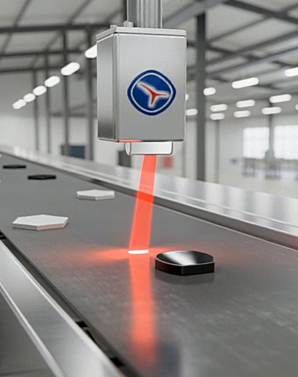
Microwave Photonics GmbH is developing an innovative terahertz scanner (TeraScan) that can not only identify plastics on moving conveyor belts contactlessly and in real time, but is also able to determine the position of the plastics relative to the scanner (localization). The scanner is based on intelligent terahertz beam steering, combining THz sources with innovative terahertz antennas. The goal is to detect and localize plastic objects — for example on conveyor belts — as close to real time as possible, offering significant speed advantages.
For additional details, please visit TeraScan.